Officers
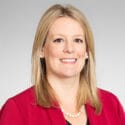
Syracuse University
smmonnat@syr.eduBio: Monnat is a rural demographer and population health scholar whose research examines trends and geographic differences in health and mortality, with a special interest in rural health and health disparities.
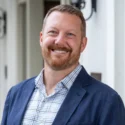
Louisiana State University
timslack.lsu@gmail.comBio: Tim Slack is a professor of sociology at Louisiana State University (LSU). His scholarship coalesces around the areas of social stratification and social demography, with an emphasis on geographic space and place as axes of inequality. He has published extensively, including several papers in Rural Sociology. With Shannon Monnat, he recently published Rural and Small-Town America: Context, Composition, and Complexities (University of California Press, 2024). He frequently delivers research presentations at the meetings of major professional societies (e.g., RSS) and seek opportunities to speak to policy-oriented audiences (e.g., Federal Reserve, Louisiana State Legislature). His expertise is also regularly sought for stories produced by major media outlets, such as The New York Times, USA Today, and The Advocate (Louisiana’s leading daily newspaper). He has served twice as an associate editor for Rural Sociology (2005–2009, 2021–2023) as well as on the editorial boards of Demography (2016–2020) and Population Research and Policy Review (2012–2020). He has been the recipient of the LSU Rainmaker Award, LSU Alumni Association Faculty Excellence Award, and LSU Distinguished Faculty Award, all university-wide honors. In 2025, he received the Frederick H. Buttel Outstanding Scholarly Achievement Award from RSS. He teaches a variety of courses at LSU, spanning introductory sociology to Ph.D.-level seminars. He has taught over 5,000 students at LSU, which is greater than the total population of his hometown (Dryden, NY, 2020 pop. 1,887) and his wife’s hometown (Gueydan, LA, 2020 pop. 1,165) combined.

- University of California, Davislrpruitt@ucdavis.eduBio: Lisa R. Pruitt is Brigitte Bodenheimer Research Scholar and Distinguished Professor of Law at UC Davis. Her pioneering scholarship focuses on rural-urban difference in how people engage legal systems and the state, revealing urbanormativity in how scholars and policymakers think about law. Pruitt draws attention to how the socio-spatial features of rural places shape civil access to justice and entanglement with criminal legal systems. Pruitt grew up in the rural Arkansas Ozarks.
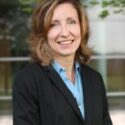
Penn State University
exr497@psu.eduBio: Elizabeth Ransom is an Associate Professor of International Affairs and Senior Research Associate in the Rock Ethics Institute at The Pennsylvania State University. Prior to joining Penn State University, she was on the faculty at the University of Richmond. Trained as a sociologist, she conducts research at the intersection of agriculture, globalization, social change and development. Much of her work has focused on Southern and Eastern Africa, the United States, and Australia, with an emphasis on livestock and dairy production. She has worked on gender and women’s empowerment, the impact of science and technology on our food system (i.e., GE crops, antimicrobial resistance), and agri-food change in the context of climate change and disasters.
University of Wisconsin-Madison
kcurtis@ssc.wisc.edu
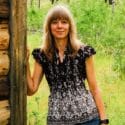
Bio: Curtis comes from a rural community in Northeastern Montana, which has shaped her interests in population dynamics, their relationship to economic and environmental forces, and their implications for the well-being of rural places and people, near and far, connected through time and space.

- SSB Management
sbevan@ssb-management.com
Council Members
- University of Wisconsin Madison
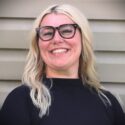
rchandler4@wisc.eduBio: Raeven Faye Chandler joined the Applied Population Laboratory in July 2023 as the outreach program manager and transitioned to research scientist in July 2025. Chandler is a social demographer whose research focuses on individual, family and community well-being. She is particularly interested in spatial and social determinants of health and other forms of well-being, including poverty and mobility, with a focus on variation in these outcomes along the U.S. rural-urban continuum. Her research is framed by an ecological perspective to inform our understanding of the correlates and consequences of social disadvantage, particularly at the intersections of race/ethnicity, spatial inequality, and health. The ultimate goal of Chander’s research is identifying potentially modifiable areas for community intervention with a strong emphasis in public policy. Chandler has a B.A. (2007) and M.A. (2011) in Sociology from California State University San Marcos and a Ph.D. (2019) in Rural Sociology and Demography from Penn State.

National Laboratory of the Rockies
weston.eaton@nlr.govBio: Weston M. Eaton is a Senior Researcher, Stakeholder Engagement and Social Science with the National Laboratory of the Rockies (NLR). Wes is a rural and environmental social scientist. His research focuses on whether and how participatory approaches to research and decision making, including community and stakeholder engagement, can help better manage complex socio-environmental issues centering on energy and water. Wes also designs, convenes, facilitates, and evaluates a range of stakeholder engagement processes. Prior to joining NLR in 2024, he worked with the University of Wyoming and Penn State University. Wes has a PhD in Sociology from Michigan State University.
Iowa State University
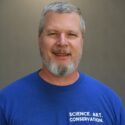
arbuckle@iastate.eduBio: J. Arbuckle is a rural sociologist at Iowa State University. His research and extension efforts focus on improving the agronomic, environmental, and social performance of agricultural systems through better understanding of knowledge, attitudes, and other drivers of farmers’ and agricultural stakeholders’ decisions and behavior.

- Florida State University
matt.brooks@fsu.eduBio: Matt Brooks is the Charles B. Nam Assistant Professor in the Sociology of Population at Florida State University, where he is also the associate director of the Center for Demography and Population Health. Matt’s research focuses on the causes and consequences of demographic change in rural America and how rurality can often be axis of inequality for the life chances of children, families, and older adults. Matt’s work has been published at outlets such as Demography, the Journal of Marriage and Family, and Rural Sociology. At FSU, Matt has taught a variety of courses, including “Rural America Now!,” “Cities and Society,” and “Population Mobility”, and has enthusiastically mentored students in the applied Master’s in Demography program. Finally, Matt has also written and spoken about U.S. demographic trends for a general audience at The Washington Post, The Conversation, and NPR-Morning Edition.
Affiliation
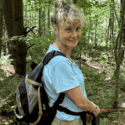
leanne.avery@oneonta.eduBio: Leanne began her career as a high school science teacher and is now Professor and Chair in the Department of Elementary Education and Reading at SUNY Oneonta. Her research has focused on photodocumenting rural children’s local STEM knowledge, the role of families and intergenerational knowledge in STEM education, and the impacts of critical place-based teacher development on classroom practice.
Leanne is also a rural first-generation college student, and she purposefully integrates her education with her rural roots to pave pathways for rural first-generation students to gain access to STEM higher education and careers. She is changing the urbanormative deficit perspective of the rural to one that honors the cognitive diversity of local rural knowledge and its complex connectivity to place. Her more recent work centers on braiding methodologies of rural Indigenous and rural non-Indigenous knowledge and an eco-centric lens to explore rural positionality.
- University of Oklahoma
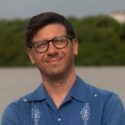
icarrillo@ou.eduBio: Ian Carrillo is an Assistant Professor of Sociology at the University of Oklahoma. He uses qualitative and ethnographic methods to study how race, class, and environment interact to shape inequality, with a focus on Brazil in the United States. Ian’s work in Brazil focuses on the sugarcane industry and explores themes related to color-blind racism, racialized organizations, and environmental regulation. His book The Business of Racism: Labor and Environment in Brazil’s Racial Capitalism (Duke University Press) will be published in May 2026. Ian’s research on the United States focuses on the racialization of environmental policy and structural racism in meatpacking. He has published research in leading journals, including Socius, Rural Sociology, Agriculture and Human Values, Sociological Perspectives, Sociology of Race and Ethnicity, Current Sociology, and Latin American Perspectives. He also co-edited the book Environmental Sociology Now (University of California Press), which is forthcoming in March 2026.
The Wilderness Society
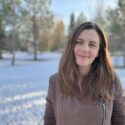
rpilgeram@tws.orgBio:Ryanne Pilgeram’s, PhD, career as a rural sociologist focuses on envisioning equitable and thriving rural communities. She was a Professor of Sociology at the University of Idaho, where she worked for nearly 15 years before transitioning to The Wilderness Society in 2023. At TWS, she focuses on federal policy at the intersection of public land conservation and transitioning fossil fuel communities. She is the author of numerous publications focused on inequality in agriculture, and she wrote Pushed Out: Contested Development and Rural Gentrification in the US West, a book that examines the structural causes of inequality in rural communities.

- JG Research & Evaluation
kristal.jones@gmail.comBio: Kristal received her PhD in Rural Sociology and international Agriculture and Development from the Pennsylvania State University in 2014 and worked in a variety of research positions at Penn State, the University of Maryland, and the Center for Large Landscape Conservation before co-founding an applied research and evaluation consulting firm, JG Research and Evaluation, in 2018. In her role as principal researcher at JG, she leads business development and research portfolios focused on food systems, natural resources, reproductive and maternal health, and human services. Her work utilizes both quantitative and qualitative methods, and draws on a wide range of literature and disciplines to provide policy or program-relevant implications and recommendations to clients. Equally importantly, Kristal provides internal human resources and professional development support to a staff of 20 members spread across two time zones and seven states. In this role, she focuses on creating opportunities for colleagues to learn-while-doing, providing input at key points in the research management and implementation process, and maintaining a non-hierarchical workplace that supports individual staff members and the organization.

University of Kansas Medical Center
tmueller2@kumc.eduBio: J. Tom Mueller, PhD, is an Assistant Professor of Population Health and Director of the Kansas Center for Rural Health at the University of Kansas Medical Center. As a rural sociologist and demographer, he studies the geography of well-being and the environment in rural America. Dr. Mueller’s work focuses on three primary areas: health and well-being in rural America, (2) environmental injustice and environmental health, and (3) the measurement and tracking of poverty across space.
Dr. Mueller has published his work in leading outlets such as the Proceedings of the National Academy of Sciences; American Journal of Public Health; Nature Water; Nature Communications; Demography; and Rural Sociology, among others. Dr. Mueller pursues and receives funding from a variety of sources including the National Institutes of Health, the National Institute of Food and Agriculture, and the National Science Foundation.

Utah State University
jessica.schad@usu.eduBio: Dr. Jessica Schad is a Professor in the Sociology Program, Director of the Community and Natural Resources Institute, and an Extension Specialist. As a rural community and natural resources sociologist, her community-engaged and applied research focuses on the dynamic relationships between extractive and non-extractive natural resource dependency and rural people and places with the goal of promoting resiliency and wellbeing. Notably, Dr. Schad started the Utah People & Environment poll to track Utahns’ perceptions on environmental issues of importance to the state longitudinally. Dr. Schad has published 60 peer-reviewed journal articles, four book chapters, nine extension publications, and 20 policy/research briefs and has been on research teams securing extramural grants totaling nearly $21 million. Overall, this work has provided a better empirical and comparative understanding of rural residents’ perspectives on community and environmental issues in diverse rural places across the United States and within Utah. Graduate and/or undergraduate students always work closely with Dr. Schad on her research projects. Reflecting both the breadth and depth of her expertise on rural places, she was recently selected to lead the Rural Communities Chapter of the Sixth National Climate Assessment, the U.S. Government’s preeminent report on climate change impacts, risks, and responses.

Iowa State University
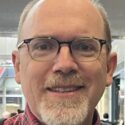
dpeters@iastate.eduBio: David J. Peters is a Professor of Sociology and Extension Rural Sociologist at Iowa State University. His work broadly encompasses social and economic change in rural communities. Specific research areas include rural population and health, rural poverty and inequality, and rural crime. Dr. Peters has published in top-tier journals in rural sociology, public health, agricultural economics, and criminology. He has been awarded grants from the National Science Foundation (SCC, Sociology, and NRT), the U.S. Department of Agriculture (AFRI), and the National Institute of Justice. He is faculty advisor for the Agricultural and Rural Policy Studies major at ISU, and teaches courses in rural sociology and applied statistics. Previously, he was an Assistant Professor of Agricultural Economics at the U. of Nebraska. He has worked as a senior researcher for the Missouri Department of Economic Development; and for the Rural Policy Research Institute (RUPRI) at the U. of Missouri. He holds a B.S. cum laude from the U. of Minnesota, and an M.S. and Ph.D. from the U. of Missouri.
Pennsylvania State University
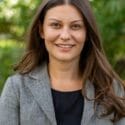
aqa6158@psu.eduBio: Ayse’s research focuses on the ways climate change and variabilities impact food security and migration, particularly in the rural and Indigenous communities of the U.S. and Canadian Arctic. Ayse has co-authored research on topics such as environment and migration, transportation, and tourism. Her dissertation investigates the impacts of climate change on subsistence and market-based food systems, as well as the complex decisions rural residents face about whether to stay or leave their homes.

University of Wisconsin
emgreen3@wisc.eduBio: I am a PhD candidate in the Population Health program at the University of Wisconsin-Madison School of Medicine and Public Health. I am also a National Institute on Aging Graduate Trainee through the Center for Demography of Health and Aging on campus. I broadly research aging and end-of-life healthcare, but I also have interests in variations in health outcomes along the rural-urban continuum, health policy, and global health. I position myself as a mixed-methods researcher; my dissertation project, which studies loneliness as a modifiable risk factor for dementia, uses both qualitative and quantitative methods. I am also an interdisciplinary researcher. I hold a bachelor’s degree in international studies with a concentration in global health and minors in German and society & health from the University of Mississippi and I have also completed coursework towards a doctoral minor in German at Wisconsin. I am a member of the Health and Biodemography Working Group and the Qualitative Research Group at the university as well.Though I am now located in Wisconsin, I grew up in Mississippi, first in the Delta and then in the north-central region of the state. My childhood granted me first-hand experience of not only the issues that rural communities face but also the beauty of rural landscapes and the resilience of rural residents. I am, as I often tell people, a proud product of the Mississippi public school system, and I attended the state’s flagship
university for my bachelor’s degree. Between graduating from high school and beginning college, I completed a summer term of service as an AmeriCorps*VISTA (Volunteers in Service to America) at the LOU Boys and Girls Club. During my bachelor’s studies, I worked for North Mississippi Rural Legal Services as an intern with the Elder Law Project and completed shadowing hours at both the local hospital and a rural community hospital in a nearby county. I became interested in my field due to these experiences showing me how various sociodemographic factors impacted older adults’ experiences of not only the legal space but their lives and how access (or lack thereof) to robust medical care shapes health outcomes.
Outside of research, I am passionate about being involved in the community y. I have served as co-president of the Population Health Sciences Student Organization at my university, and I am a member of and the policy engagement chair for Catalysts for Science Policy, an organization made up of STEM-focused graduate students that has led me to write policy memos for Madison Common Council and present my research to legislators at the Wisconsin State Capitol. I am an active member of BadgersVote, a nonpartisan coalition of students at my university who support voting rights and access. Through this group, I have worked the polls in numerous elections. I am also a member of the Elder Justice Coalition. Additionally, I work as an assistant self-defense instructor through the RCC Sexual Violence Resource Center of Dane County. I am also a member of Grace Episcopal Church, where in addition to singing in the choir I serve as an elected member of vestry (parish governance) and on the strategic planning committee, for which I have completed analyses of sociological and demographic trends for Wisconsin and Dane County. When I’m not focusing on my PhD studies or doing one of these many activities, I’m usually at home with my cat, trying to crochet while he tries to eat the yarn!University Profile